

Unions raise the red flag on norms for industrial units
Are you exploring the new labor codes? Don’t worry. Here is the useful blog for you.
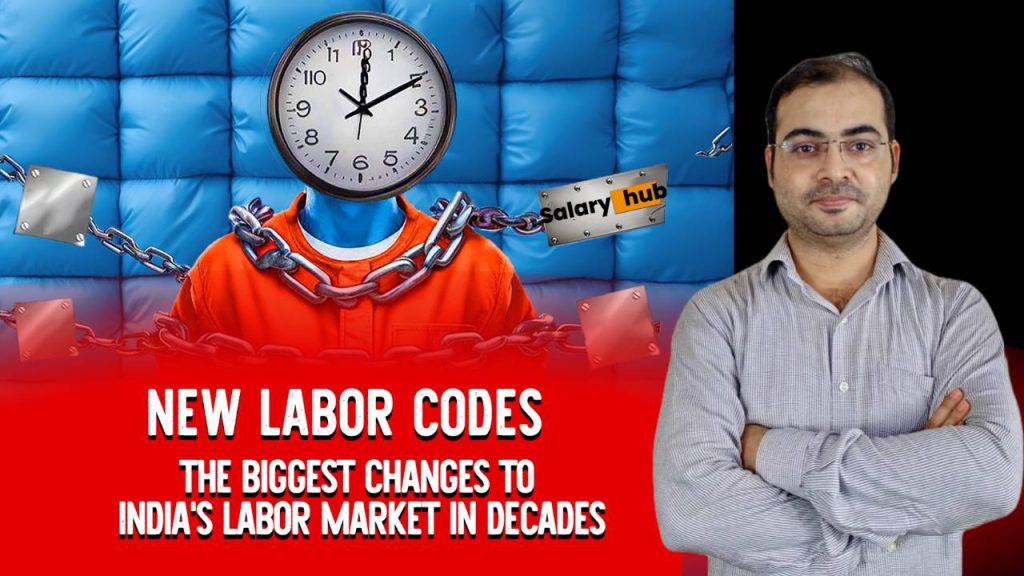
One of the biggest changes to India’s labor market in decades is currently taking place. As of 21 November 2025, most of the provisions of the four Labour Codes have been made effective. Four complete codes—Wages, Social Security, Industrial Relations, and Occupational Safety, Health & Working Conditions (OSH)—are created by combining 29 current labor regulations.
In addition to being in line with international norms, this reform is positioned as a cornerstone for improving worker safety, facilitating commercial transactions, encouraging formalization, and fostering inclusive growth. This means a clearer workforce management strategy and fewer overlapping requirements for firms.
One of the most significant modifications is the redefinition of wages, which serves as the foundation for all computations under the rules. Depending on the wage structure that the business chooses, this can lead to an increase or decrease in the statutory responsibilities. The impact of this on the net take home of the employee also needs to be assessed. A complete financial sensitivity analysis by employee grade, tenure, and function becomes important.
| Shayara Bano or Shah Bano | Landmark Cases Amid the release of Haq, starring Yami Gautam | AIBE 20 Notification 2025- Check Online Application |
Amongst others, the Codes encourage gender and wage parity, create provisions for night shifts for women with specified safeguards, national floor wage for all, strengthened health and safety regulations. They need appointment letters and provide social security benefits to gig workers, platform workers, fixed-term employees, and the unorganized sector.
A few of the principles of the International Labour Organization (ILO), including pay, gender equality, and occupational safety appear to be aligned with the Codes. According to ILO, approximately 2.78 million workers die annually from occupational accidents and diseases, underscoring the necessity of OSH rules. India’s gender-neutral wage regulations are important because the ILO’s Global Wage Report reveals ongoing gender pay disparities globally. In June 2025, ILO committed to binding global standards for platform labor which underscores India’s progressive objective of integrating platform workers in the Codes.
From a company standpoint, in the long run, streamlined and digital compliance will minimize administrative complexity and lawsuit risk, enhancing investor trust. Formalizing employment will improve social security coverage and tax compliance. Parallelly, digital transformation projects of the Government, such as EPFO 3.0 etc. complement these changes, boosting transparency and confidence.
There may, however, be a need to navigate some short-term problems. A crucial one being aligning to the new and critical definition of wages, as the difficulties surrounding its interpretation continue especially with respect to variable / one-time payments, stock perks etc. In due course, the Ministry will undoubtedly provide some examples or explanations in this regard.

Employers would also need some urgent catch-up on cost provisioning / recalculation of benefits such as gratuity, leave encashment etc. which in the absence of any confirmation otherwise, may have a retro-active effect. For instance, gratuity is determined based on the latest drawn wage for every completed year of service. With the change in definition of wage under the Codes, it could lead to an augmentation of the gratuity of responsibility for employee’s termination post commencement of the Code.
Also, gratuity duties towards fixed-term employees (including the existing) would need to be provided for. Also, the ambiguity around calculation for many short-term contracts would need to be addressed. These alterations could affect payroll structures, financial planning, and compliance initiatives in the short term.
To guarantee compliance and workforce transparency, organizations should conduct a thorough classification of employees, workers, and gig workers based on role profiles and wage levels. Additionally, they must guarantee that documentation is impenetrable.
Organizations that depend substantially on contract employment should examine market dynamics and legal shifts under the Codes, which restrict outsourcing in essential services while introducing a unified registration structure. Workforce tactics will probably change as a result of these advances, allowing for more dynamic planning in industries including manufacturing, engineering, global capability centers (GCCs), IT, and logistics—all of which continue to rely heavily on contract workers.
There is a dual compliance environment and ambiguity over eventual alignment because the Central and State rules are still being finalized even though the Codes have gone into effect. Organizations must carefully consider which provisions to adhere to throughout the transition in the interim, especially when there are numerous state regulations in effect.
In conclusion, the Labour Codes, which combine business facilitation with worker welfare, represent a paradigm shift in India’s employment regulations. While they aim to establish the groundwork for a future-ready workforce, their success rests on stakeholder collaboration, robust enforcement and continual adaptation to global best practices. For businesses, navigating the financial effect, payroll reconfiguration, state wise compliance mapping, strategic personnel planning, review of vendor agreements, audit disclosures, digitizing processes, comprehensive compliance dashboards, will be important to leveraging the reforms for sustainable growth.